
Jonathon Mitchell-Smith, TextureJet CEO and Founder, explores precision deburring and robotics:
Manufacturing has undergone a remarkable digital transformation over the past two decades. Networked machine tools, IoT, cloud computing, digital twins and automated inspection systems have fundamentally changed how products are designed and produced, enabling the development of fully integrated, adaptable smart factories.
Yet many surface engineering processes remain rooted in traditional techniques, operator experience and fixed tooling. Deburring is a prime example: a critical manufacturing operation that has too often been viewed as a secondary process rather than a strategic opportunity for innovation.
As designers demand greater performance from components, and manufacturers seek more flexibility, traceability and productivity, that mindset is beginning to change. The industry is moving towards software-defined manufacturing, where desired outcomes are specified digitally and delivered consistently through interconnected, intelligent systems. Surface engineering is now beginning to follow the same path.
Software-Defined Surface Engineering
This shift marks the emergence of Software-Defined Surface Engineering: an approach that combines advanced process-control software, electrochemical jet machining and collaborative robotics to deliver precise, repeatable surface treatments without the constraints of conventional methods. It is an approach TextureJet is actively embracing.
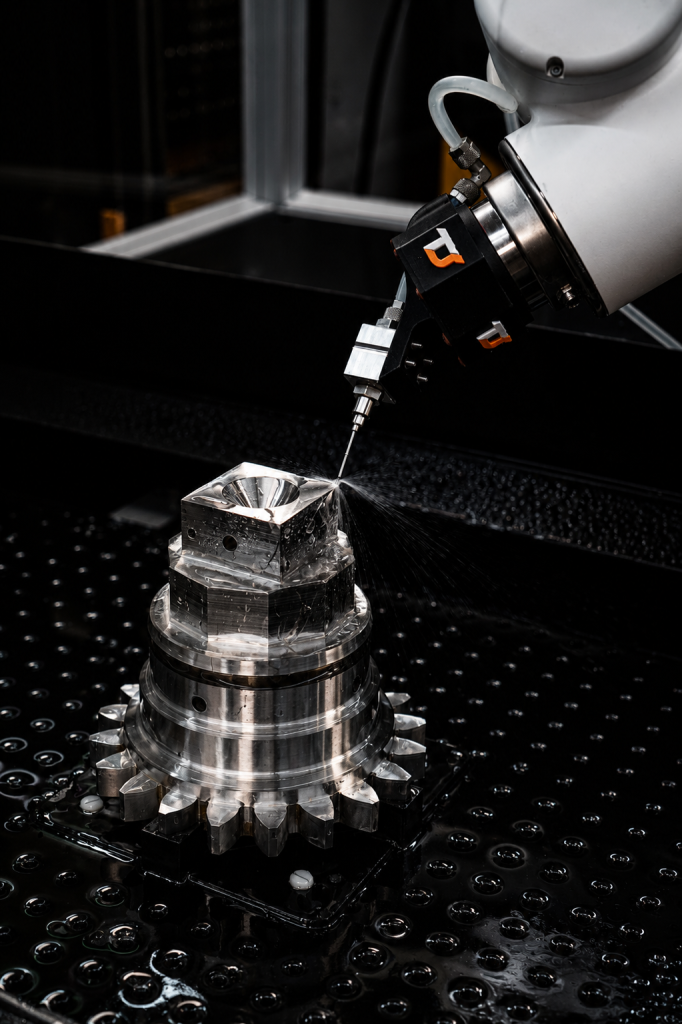
Why finishing processes matter more than ever
The importance of deburring is easily underestimated.
Burrs created during machining may be small, but their consequences can be significant. Left untreated, they can disrupt component assembly, introduce contamination, increase wear, reduce fatigue life and create safety risks for operators. In sectors including defence and aerospace, medical devices and power generation, even a minor imperfection can have serious consequences.
As components become more complex and quality requirements continue to rise, manufacturers are discovering that traditional finishing processes can struggle to keep pace. Today’s production environments demand a level of flexibility, repeatability and consistency that established methods were not necessarily designed to provide.
What appears to be a small finishing operation can therefore become a major obstacle to quality, productivity and scale.
Read the full article on The Engineer: https://www.theengineer.co.uk/content/opinion/software-defined-surface-engineering-explained